
Common estate planning myths still persist in 2026, with only 33% of Americans having a will or trust, down 6% from 2023.
From what we have heard from our clients at Davenport & Associates, these misconceptions can lead to costly mistakes like probate fees averaging $10K or tax losses up to 40%.
If you’re thinking “I don’t need a trust because I’m not wealthy” or “A will is enough for my estate”, this blog debunks 6 common myths with 2026 insights.
FAQ: “What are the biggest estate planning myths in 2026?” – From assuming planning is only for the rich to ignoring incapacity, these errors risk your legacy.
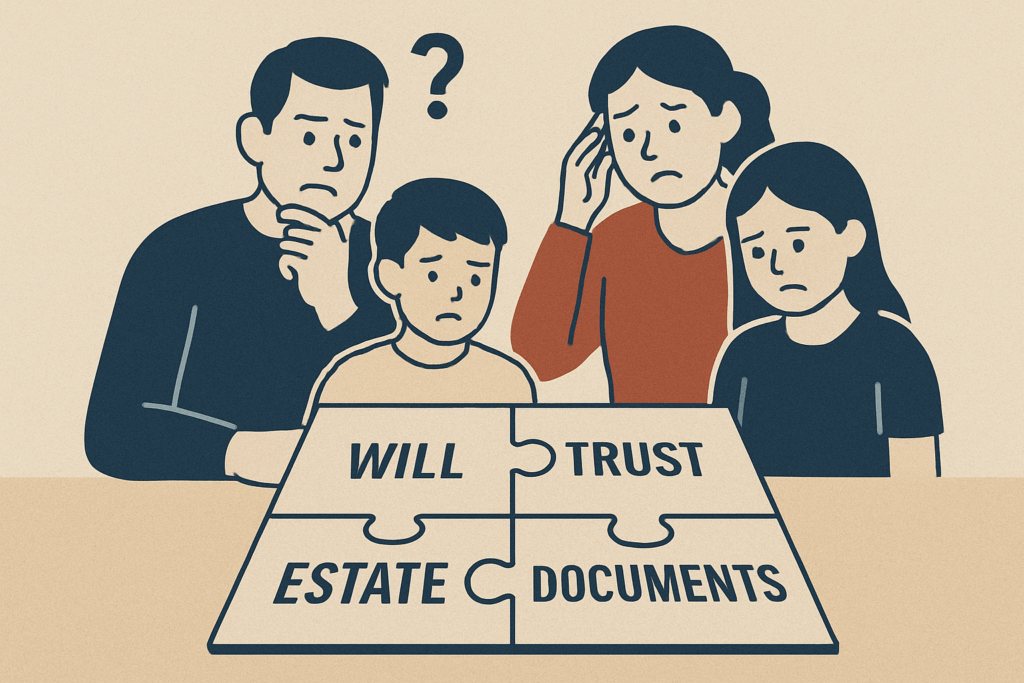
Many believe trusts are only for millionaires, but 43% of middle-class Americans risk probate without one.
FAQ: “Do I need a trust if I’m not wealthy in 2026?” – No, trusts are for anyone with assets like a home or retirement accounts, avoiding probate costs (3–7% of estate value).
A revocable trust protects modest estates from probate delays (9–18 months) and fees ($5K–$10K average). In 2026, with 52% lacking any plan, trusts ensure efficient asset transfer.
52% of people think a will suffices, but it doesn’t avoid probate or incapacity issues.
FAQ: “Is a will enough for estate planning in 2026?” – No, wills go through probate (costs 3–7% of estate), unlike trusts that bypass it.
Wills are public and probate-heavy; trusts offer privacy and control.
Stat: 56% underestimate probate costs, thinking under $1,000.
Trusts also handle incapacity, essential as 46% retire for health reasons.

This myth deters many homeowners, but 70% of estates include real estate vulnerable to probate.
FAQ: “Can I put a mortgaged home in a trust in 2026?” – Yes, under the Garn-St. Germain Act, it doesn’t trigger the due-on-sale clause.
Mortgage lenders allow trust transfers if you remain responsible for payments. This protects your home from Medicaid look-back while avoiding probate fees. In 2026, with home equity at record highs, trusts safeguard $300K+ average homes.
Only 33% of adults have plans, with 43% citing health as a trigger.
FAQ: “Is estate planning only for the elderly in 2026?” – No, 56% of 18–34 year-olds now plan, driven by incapacity risks.
Planning protects against unexpected events like illness, benefiting all ages. Stat: 46% retire for health, underscoring early preparation.
This overlooks probate for non-designated assets.
FAQ: “Do beneficiary designations override a will in 2026?” – Yes for specific assets, but wills handle the rest, risking probate for 60% of estates.
Designations cover IRAs but not homes; trusts unify everything.
Costs deter 43%, but flat-fee services save 50% vs. hourly.
FAQ: “How much does estate planning cost in 2026?” – $1,500–$3,000 for trusts, far less than probate ($10K average).
Free consultations and fixed fees make it accessible; skipping planning costs more.
With 52% lacking plans, debunking myths is key.
FAQ: “Common estate planning mistakes in 2026?” – Ignoring trusts for mortgages or assuming wills suffice.
Contact Davenport & Associates for a free consultation to craft your plan or take our free estate planning quiz to see where your plan stacks up!
John F. Davenport, founder of J. Davenport Advisors/Davenport & Associates and J. Davenport Legal in Norwalk, CT, is a licensed attorney in New York and Connecticut. As an experienced estate planning attorney and financial advisor, he has spent more than 30 years guiding clients through revocable living trusts, asset protection planning, Medicaid strategies, and tax-efficient wealth transfer, while also providing investment advisory and retirement income planning services to help families secure both their lifetime needs and their legacy for their heirs.